
ESP360° · Decision Provenance ArchitectureBreakthrough T1D CRC 2026 · Philadelphia · October 9–11
ESP360°Mark E. Paull · Independent Researcher

Clinical AI is missing a layer.

I built a way to represent it.

Devices record what happened. ESP360° captures the reasoning behind it — what a person knew, observed, weighed and decided — as structured data on the same timeline.

A decision-provenance architecture translating lived human expertise into machine-readable clinical data. Proof of concept, not validation. It does not score compliance and does not establish causation.

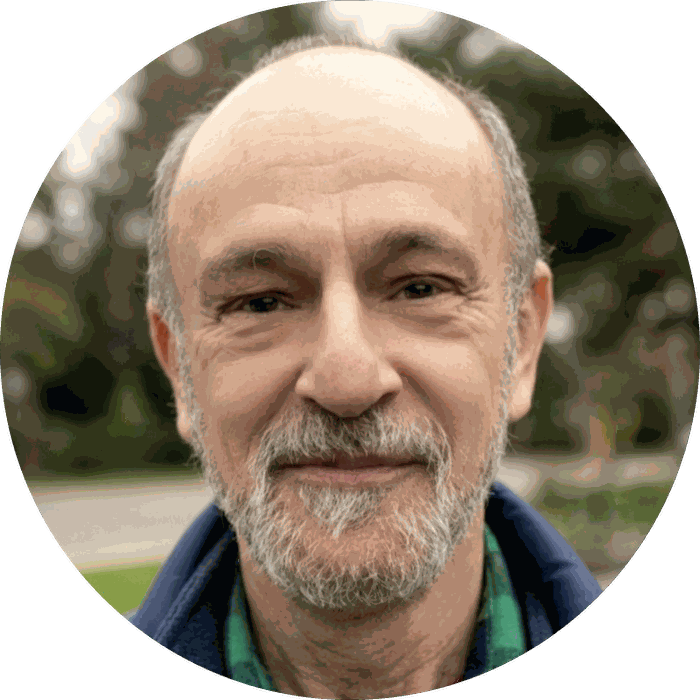
Mark E. Paull
Mark E. Paull
Independent Researcher · Decision Systems Architect

The missing layer

The outcome is recorded. The decision often is not.

A glucose value can show where the system ended up. It does not necessarily preserve what the person knew at the moment of action, what they expected next, why they delayed or corrected, or which competing risks shaped the decision.

ESP360° asks whether that decision context can be represented in a form that is reviewable by humans and usable by computational systems without collapsing expertise into a compliance label.

536records
340structured variables
21human-state layers
468decision events

Architecture

How a decision becomes computable and reviewable.

01

State + time

Capture what was happening and synchronize it to one clock.

02

Context + decision

Preserve what was going on and what was decided at the moment of action.

03

Trajectory + deviation

Compare what actually happened with the expected trajectory and classify divergence before attribution.

04

Human review

A person reviews the structured representation rather than disappearing from the loop.

05

Provenance

The record preserves the decision pathway so similar outcomes need not be treated as identical events.

Scope

Research architecture

ESP360° is presently a proof-of-concept decision-representation and mapping architecture, not a regulated patient-facing clinical product.

Evidence & limits

Enough to challenge. Not enough to overclaim.

Demonstrated: N-of-1 implementation, temporal alignment with device data, and an auditable provenance record. Not yet established: a formal risk-analysis matrix, intended-use validation and safety, inter-rater reliability, cross-user evaluation, or regulatory pathway determination.

The current work is intended to make the architecture concrete enough for researchers, clinicians, AI developers and industry partners to test, criticize and determine the appropriate verification and validation pathway.

Breakthrough T1D Clinical & Research Congress 2026

One oral presentation. Two e-posters.

Abstract / e-poster #33

Decision-Aware Insulin Therapy

A 360-variable, 21-layer decision manifold for capturing moment-of-action clinical reasoning.

Abstract Poster
Oral presentation #47

Temporal Topology in CGM

Why midnight segmentation can introduce structural measurement artifact into physiologically continuous data.

Abstract Oral slides
Abstract / e-poster #51

Selective Ground Truth in Adaptive Medical AI

Preventing expert drift when valid human overrides are reduced to non-adherence or model error.

Abstract Poster

The work before the architecture

1967 notebook → annotations → internal model → pattern library → missing layer → ESP360°

1967

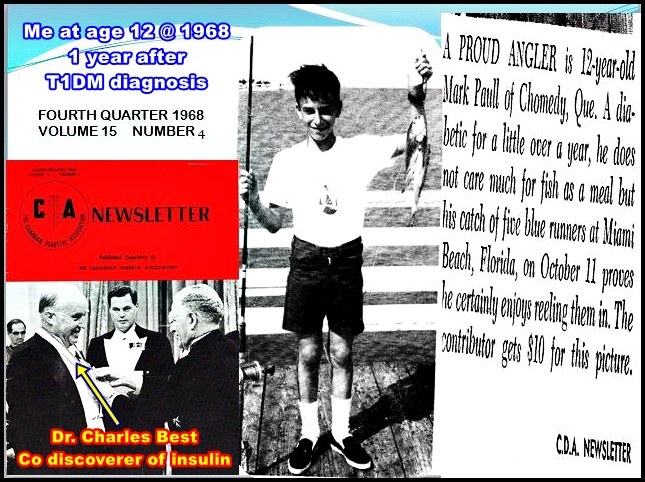
A doctor hands an eleven-year-old boy a notebook and asks him to record the numbers. He begins recording the context around them too.

Decades of lived management

The annotations become a private pattern library: not only what happened, but what was expected, noticed, feared, weighed and decided.

COME ON, MARKY

The manuscript makes the implicit system explicit: medicine records measurements, while survival often depends on reasoning that the clinical record does not preserve.

ESP360°

The question becomes technical: can that missing reasoning layer be represented as structured, reviewable decision provenance?

COME ON, MARKY is a memoir currently under review. The public site describes the intellectual lineage of the work; proprietary implementation details are not published here.

About

Mark E. Paull

Independent researcher and decision systems architect, living with type 1 diabetes since 1967.

Peer reviewer for Diabetes Care and Clinical Diabetes. Published in Diabetes Care (ADA), Diabetes Technology & Therapeutics and STAT News. ESP360° is being presented at Breakthrough T1D CRC 2026 in Philadelphia.

Contact Mark